
Contributor: Don Lewis

Entrepreneurs with disabilities in the Fraser Valley, including brain injury survivors and the family members supporting them, often carry real business ownership aspirations alongside daily limits other founders don’t have to plan for. The core tension is simple and heavy: a strong idea can collide with fatigue, memory gaps, unpredictable symptoms, and the extra work of finding services that actually fit.
Understanding Capacity-Fit Business Planning
It helps to name the real goal: a business that fits your brain and your life. Capacity fit planning means choosing an accessible business model and setting up disability-friendly structures that match your strengths, needed accommodations, and daily limits. When traditional work is not accessible for people with disabilities, entrepreneurship becomes an important employment option.
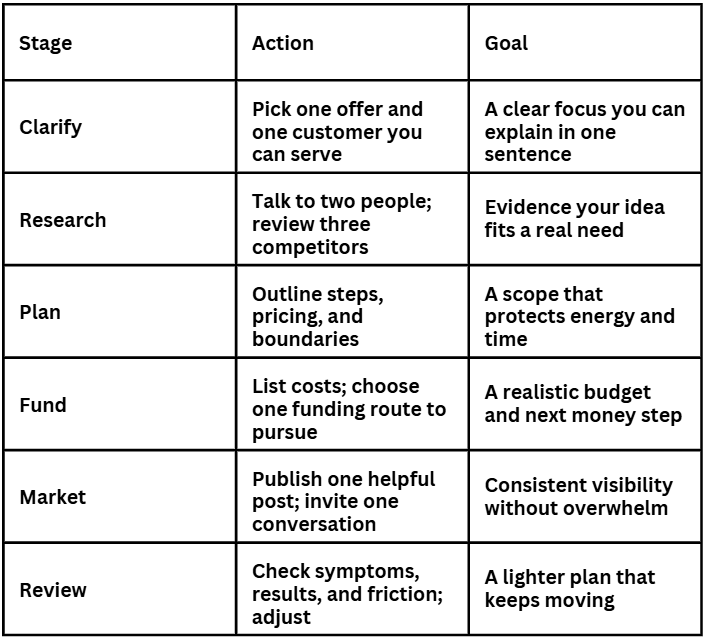
Plan → Research → Build → Review
This workflow turns a big, intimidating startup idea into a small set of repeatable moves you can return to even when symptoms fluctuate. It also helps you find the right supports, funding paths, and peer connection points without relying on memory alone. Many teams lean on competitive intelligence to stay oriented, and you can adapt the same habit in an accessible way.
Quick Answers for Starting With Less Stress
Q: What are simple ways to organize and plan my ideas to reduce feeling overwhelmed?
A: Keep it to one page: problem, who you help, what you offer, how you get paid, and your next tiny step. Use a checklist for repetitive tasks like invoices, emails, or packing orders since structured tools can build confidence over time, similar to how confidence in procedure improved after an intervention.
Q: If I want to explore new learning options to gain skills for managing a venture on my own, where should I start?
A: First, name your biggest skill gap, like pricing, marketing, budgeting, or systems, so you do not over-study. Then pick a structured, flexible learning route you can complete in short sessions while you plan and test, such as an online degree in business. Aim for steady progress, not perfect mastery.
Take One Small Startup Step That Fits Brain Injury Life
Starting a business with a brain injury can feel like balancing hope with fatigue, paperwork, and unpredictable capacity. The steadier path is a supportive, flexible mindset: build in small increments, use structure that reduces stress, and lean on accessible business resources and ongoing business support instead of pushing alone.